Saturday, December 18, 2010

Hang Seng - Head and Shoulders Pending


Is the major B wave for Hang Seng completed?


Looking at the line chart, until Friday, the index is resting on top of the neckline. To complete the 'head and shoulders' pattern, the index has to go below the neckline and pull away. The volume pattern is a classical 'head and shoulders' pattern.

Based on candlesticks chart, the index is slightly below its neckline. The moment 'head and shoulders' is confirmed formed, the bear market rebound since March 2009 can be said completed. The next wave will be the major wave C that can go all the way down to below wave A. I believe Hang Seng is moving ahead of Dow that I believe will follow the footpath of Hang Seng.

History of Malaya

Can click on Picture essay to have a look at some valuable photos and Malaya history


Friday, December 17, 2010

Story of an aging couple


This is a story of an aging couple told by their son who was President of NBC NEWS.

This is a wonderful piece by Michael Gartner, editor of newspapers large and small and president of NBC News. In 1997, he won the Pulitzer Prize for editorial writing. It is well worth reading, and a few good chuckles are guaranteed. Here goes...

My father never drove a car. Well, that's not quite right. I should say I never saw him drive a car.

He quit driving in 1927, when he was 25 years old, and the last car he drove was a 1926 Whippet.

"In those days," he told me when he was in his 90s, "to drive a car you had to do things with your hands, and do things with your feet, and look every which way, and I decided you could walk through life and enjoy it or drive through life and miss it."

At which point my mother, a sometimes salty Irishwoman, chimed in:
"Oh, bull shit!" she said. "He hit a horse."

"Well," my father said, "there was that, too."

So my brother and I grew up in a household without a car. The neighbors all had cars -- the Kollingses next door had a green 1941Dodge, the VanLaninghams across the street a gray 1936 Plymouth, the Hopsons two doors down a black 1941 Ford -- but we had none.

My father, a newspaperman in Des Moines , would take the streetcar to work and, often as not, walk the 3 miles home. If he took the streetcar home, my mother and brother and I would walk the three blocks to the streetcar stop, meet him and walk home together.

My brother, David, was born in 1935, and I was born in 1938, and sometimes, at dinner, we'd ask how come all the neighbors had cars but we had none. "No one in the family drives," my mother would explain, and that was that.

But, sometimes, my father would say, "But as soon as one of you boys turns 16, we'll get one." It was as if he wasn't sure which one of us would turn 16 first.

But, sure enough , my brother turned 16 before I did, so in 1951 my parents bought a used 1950 Chevrolet from a friend who ran the parts department at a Chevy dealership downtown.

It was a four-door, white model, stick shift, fender skirts, loaded with everything, and, since my parents didn't drive, it more or less became my brother's car.

Having a car but not being able to drive didn't bother my father, but it didn't make sense to my mother.

So in 1952, when she was 43 years old, she asked a friend to teach her to drive. She learned in a nearby cemetery, the place where I learned to drive the following year and where, a generation later, I took my two sons to practice driving. The cemetery probably was my father's idea. "Who can your mother hurt in the cemetery?" I remember him saying more than once.

For the next 45 years or so, until she was 90, my mother was the driver in the family. Neither she nor my father had any sense of direction, but he loaded up on maps -- though they seldom left the city limits -- and appointed himself navigator. It seemed to work.

Still, they both continued to walk a lot. My mother was a devout Catholic, and my father an equally devout agnostic, an arrangement that didn't seem to bother either of them through their 75 years of marriage.

(Yes, 75 years, and they were deeply in love the entire time.)

He retired when he was 70, and nearly every morning for the next 20 years or so, he would walk with her the mile to St. Augustin's Church.
She would walk down and sit in the front pew, and he would wait in the back until he saw which of the parish's two priests was on duty that morning. If it was the pastor, my father then would go out and take a 2-mile walk, meeting my mother at the end of the service and walking her home.

If it was the assistant pastor, he'd take just a 1-mile walk and then head back to the church. He called the priests "Father Fast" and "Father Slow."

After he retired, my father almost always accompanied my mother whenever she drove anywhere, even if he had no reason to go along. If she were going to the beauty parlor, he'd sit in the car and read, or go take a stroll or, if it was summer, have her keep the engine running so he could listen to the Cubs game on the radio. In the evening, then, when I'd stop by, he'd explain: "The Cubs lost again. The millionaire on second base made a bad throw to the millionaire on first base, so the multimillionaire on third base scored."

If she were going to the grocery store, he would go along to carry the bags out -- and to make sure she loaded up on ice cream. As I said, he was always the navigator, and once, when he was 95 and she was 88 and still driving, he said to me, "Do you want to know the secret of a long life?"

"I guess so," I said, knowing it probably would be something bizarre.

"No left turns," he said.

"What?" I asked

"No left turns," he repeated. "Several years ago, your mother and I read an article that said most accidents that old people are in happen when they turn left in front of oncoming traffic..

As you get older, your eyesight worsens, and you can lose your depth perception, it said. So your mother and I decided never again to make a left turn."

"What?" I said again.

"No left turns," he said. "Think about it.. Three rights are the same as a left, and that's a lot safer. So we always make three rights."

"You're kidding!" I said, and I turned to my mother for support.
"No," she said, "your father is right. We make three rights. It works."
But then she added: "Except when your father loses count."

I was driving at the time, and I almost drove off the road as I started laughing.

"Loses count?" I asked.

"Yes," my father admitted, "that sometimes happens. But it's not a problem. You just make seven rights, and you're okay again."

I couldn't resist. "Do you ever go for 11?" I asked.

"No," he said " If we miss it at seven, we just come home and call it a bad day. Besides, nothing in life is so important it can't be put off another day or another week."
My mother was never in an accident, but one evening she handed me her car keys and said she had decided to quit driving. That was in 1999, when she was 90.

She lived four more years, until 2003.. My father died the next year, at 102.

They both died in the bungalow they had moved into in 1937 and bought a few years later for $3,000. (Sixty years later, my brother and I paid $8,000 to have a shower put in the tiny bathroom -- the house had never had one. My father would have died then and there if he knew the shower cost nearly three times what he paid for the house.)

He continued to walk daily -- he had me get him a treadmill when he was 101 because he was afraid he'd fall on the icy sidewalks but wanted to keep exercising -- and he was of sound mind and sound body until the moment he died.

One September afternoon in 2004, he and my son went with me when I had to give a talk in a neighboring town, and it was clear to all three of us that he was wearing out, though we had the usual wide-ranging conversation about politics and newspapers and things in the news.

A few weeks earlier, he had told my son, "You know, Mike, the first hundred years are a lot easier than the second hundred." At one point in our drive that Saturday, he said, "You know, I'm probably not going to live much longer."

"You're probably right," I said.

"Why would you say that?" He countered, somewhat irritated.

"Because you're 102 years old," I said..

"Yes," he said, "you're right." He stayed in bed all the next day.

That night, I suggested to my son and daughter that we sit up with him through the night

He appreciated it, he said, though at one point, apparently seeing us look gloomy, he said:
"I would like to make an announcement. No one in this room is dead yet"

An hour or so later, he spoke his last words:

"I want you to know," he said, clearly and lucidly, "that I am in no pain. I am very comfortable. And I have had as happy a life as anyone on this earth could ever have."

A short time later, he died.

I miss him a lot, and I think about him a lot. I've wondered now and then how it was that my family and I were so lucky that he lived so long.

I can't figure out if it was because he walked through life,
Or because he quit taking left turns. "

Life is too short to wake up with regrets.
So love the people who treat you right.
Forget about the ones who don't.
Believe everything happens for a reason.
If you get a chance,take it & if it changes your life, let it.
Nobody said life would be easy, they just promised it would most likely be worth it."


Wednesday, December 15, 2010

Hang Seng and Singapore STI - Watch out for Head and Shoulders


Dow is on its way to complete the wave v of its major wave (3) of its mega wave B. Now that wave v is slightly above its wave iii level, it is possible for wave v to end anytime. Wave v can be quite unpredictable, it can have a failure v if it starts to turn down from here and it can also be extended if it continues to inch its way upward for another few months. Must monitor very closely for possible sign and indication.


Hong Kong Hang Seng Index


Hang Seng dropped 455 points (2%) to 22975 today to move closer to its neckline to complete its 'head and shoulders' reversal pattern. If it plunges through its neckline with high volume, its next support is 20,500.


Singapore STI


Singapore STI dropped about 30 points (1%) to close at 3147. Same as Hang Seng, it is also heading for a 'head and shoulders' reversal pattern. Has the bear market rebound since March 2009 ended? The possibility is there.

Tuesday, December 14, 2010

Heveaboard Berhad


The Group's principal activities are manufacturing and selling of ready to assemble particleboard furniture and other panel wood products.


Its earning per share has improved to 23 sens for 2009. Its last quarter (ending September 2010) earning is 5.65 sens per share, and cumulative earning from January 2010 to September 2010 (3 quarters) is 19.55 sens. Projected earning for 2010 is 25 sens per share. Its net assets per shares is Rm 2.02. Selling at 72 sens, this stock is greatly undervalued.


It has completed its major wave (I) & (II) and wave 1 & 2


Heveaboard gained 4.5 sens today to close at 72 sens with 1.3 million shares traded, it is possible that its wave 3 of major wave (III) has started.

Monday, December 13, 2010

Wikileaks - Don't Play Play


Accoding to reports, this is a "set-up job" that Anwar Ibrahim "walked into"
For other opinion on this issue, can click Malaysian - Forget about Wikileaks.
Don't forget to read the comment by anonymous 13 Dec 2010 at 13:06, sound logical.

Sunday, December 12, 2010

Dutaland, YTLE and Karambunai

Dutaland gained 4 sens last Friday with moderate volume of 4.1 million shares. Has sub-wave iii started?


It appeared to me that YTLE has completed its wave 4 of its major wave (V). It gained 8 sens last Friday with a moderately high volume of 5.1 million shares. It is possible that its wave 5 has started.


In my previous wave count for Karambunai, I did not refer to the semi-log chart. I have missed out one wave, the wave 1-2 at the beginning of the current run-up.

By using a semi-log scale for the chart, Karambunai has completed 5 waves. The question here is whether its major wave (3) has 5 or 9 waves. If major wave (3) has only 5 waves, then the major wave (3) has completed and it is forming its wave (4) at this moment. However if major wave (3) has 9 waves, watch out for its wave 7.

Saturday, December 11, 2010

Fairytale Destinations

My friend emailed me the followings that I like to share with the rest of my friends.

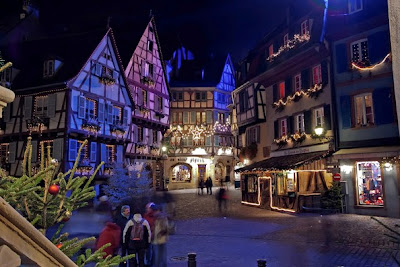
Colmar, France

Picturesque Colmar in France, looks like it came straight out of a fairy tale. This tiny town in Alsace, Colmar is called the "Capital of Alsatian Wine". With its pretty squares, fountains and canals, it is also called the "little Venice" (la Petite Venise).


Faroe Islands
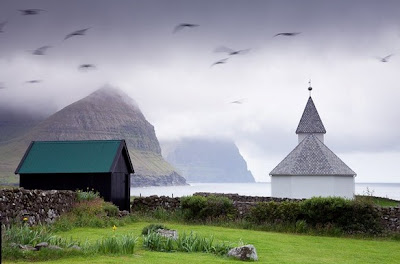
‘The Lord of the Rings' scenery of Faroe Islands truly makes you believe the archipelago is inhabited by hobbits and elves. Located halfway between Iceland and Norway, in the heart of the Gulf Stream in the North Atlantic, the 18-island archipelago is home to beautiful dramatic landscapes of volcanic peaks and oceanic waves hitting against the rocky shoreline.


Neuschwanstein Castle, Germany

The Neuschwanstein Castle was constructed on a rugged hill in the 19th century for Ludwig II, the castle's fixtures were revolutionary at that time: the building had running water and toilets with automatic flushing on every floor as well as a heating system. Today, the Neuschwanstein is the main stop on the Romantic Road, the Bavarian trail of ancient towns and castles.
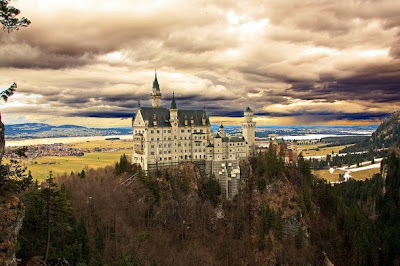


Cappadocia, Turkey

If there was a fairy tale about the enchanted land of clay, its setting would look like Cappadocia. Located in central Turkey it is famed for its pottery and unique rock formation in which the ancient people carved out their houses and churches. The region is also home to the odd-looking rock formations called "fairy chimneys" that can be found in various shapes such as cones, mushroom-like forms, columns and pointed rocks.


Hoi An, Vietnam
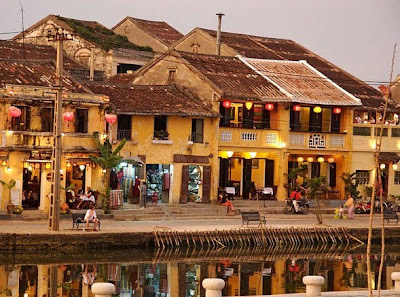
Hoi An in Vietnam is home to more silk lanterns than people. Situated on the coast of the South China Sea, the town used to be an important port and trading centre. Hoi An's fabulous atmosphere blended with captivating hospitality and fairytale architecture make the town one of the most rewarding destination in South-East Asia.


Greenland

Unspoiled, remote and untraveled, Greenland is a land of wilderness, unbeaten tracks, raw landscapes and jaw-dropping vistas. Though cold and rugged, Greenland is a place of unforgettable atmosphere warmed up by the magical aurora borealis and colourfully painted houses.


Bamboo Forest, Japan

Located in Kyoto, Japan, the landscape of the Bamboo Forest resembles the scenery of the Crouching Tiger, Hidden Dragon. Bamboo is a symbol of longevity in China, a symbol of friendship in India, and in Japan many Shinto shrines are surrounded by a bamboo forest which is considered a sacred barrier against the evil.